In-House Aerial Lift Training vs Off-Site Contractor Classes | OSHA
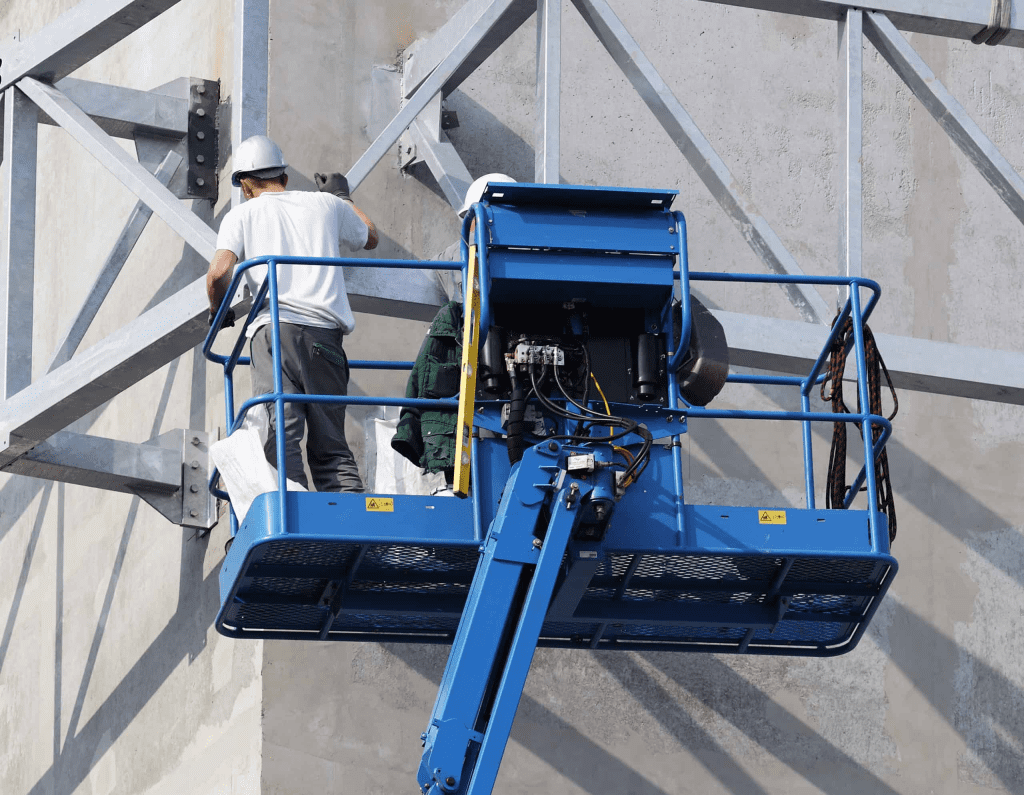
Employees who operate aerial lifts must be properly trained to meet OSHA requirements. When it comes to aerial lift training, employers typically choose between off-site contractor training and in-house aerial lift training kits.
For most businesses, in-house aerial lift training kits provide clear advantages in cost, speed, flexibility, and control—while still meeting OSHA compliance requirements.
This article explains why employer-managed, in-house aerial lift training is often the smarter option for companies that need to train operators efficiently and maintain consistent safety standards.
The Business Advantage of In-House Aerial Lift Training Kits
Covers All Aerial Lift Types in One Training System
A quality in-house aerial lift training kit can cover all common types of aerial work platforms used in the field, including:
- Scissor lifts
- Boom lifts (articulating and telescoping)
- Vertical mast lifts
Off-site contractor training often separates training by equipment type, which can require multiple classes and higher costs. In-house training kits allow employers to train operators on every aerial lift used across jobsites using one standardized system.
Lower Training Costs – Significant Long-Term Savings
In-house aerial lift training kits eliminate the recurring expenses associated with hiring outside trainers. There are no travel costs, no instructor day rates, and no per-class minimums.
Once purchased, an in-house training kit can be reused for:
- New hires
- Cross-training existing employees
- Refresher and re-evaluation training
Off-site contractor training, on the other hand, typically costs hundreds of dollars per operator each time training is required.
Flexible Scheduling with Minimal Downtime
Off-site training requires employees to attend scheduled classes, often pulling entire crews off active jobsites for a full day.
In-house aerial lift training kits allow employers to:
- Train operators individually
- Schedule training around jobsite demands
- Avoid delays and overtime costs
Training happens on the employer’s schedule—not the contractor’s.
Faster Completion and Same-Day Qualification
In-house aerial lift training kits allow operators to complete the formal training portion in 1–2 hours. This makes it possible to qualify operators the same day they are assigned to use aerial lifts.
Off-site contractor training may require waiting days or weeks for an available class, delaying work and increasing risk. In-house training keeps projects moving.
No Outside Trainers Required
With in-house aerial lift training kits, employers don’t need to bring outside trainers onto jobsites or send employees off-site.
This eliminates:
- Travel time
- Site access and orientation issues
- Disruptions caused by visiting instructors
Employers retain full control over when and how training occurs.
Standardized Training Across Jobsites
In-house training kits deliver consistent instruction to every operator, regardless of jobsite or location. Each employee receives the same training content, quizzes, and safety information.
Off-site contractor training can vary by instructor or provider. In-house kits help ensure a uniform safety standard across all crews.
Instant Certification and Simplified Recordkeeping
After completing training, operators can immediately receive proof of certification. Digital certificates and training records make it easy to:
- Track qualified operators
- Monitor expiration dates
- Provide documentation during OSHA inspections
Managing paperwork from multiple outside trainers can be time-consuming and disorganized.
Simplified OSHA Compliance
OSHA requires aerial lift operator training under:
- 29 CFR 1910.67 (General Industry)
- 29 CFR 1926.453 (Construction)
These standards require:
- Formal instruction
- Practical training and evaluation by the employer
In-house aerial lift training kits fully satisfy the formal instruction requirement. Employers then complete the required hands-on evaluation using their own lifts and jobsite conditions—exactly as OSHA expects.
Less Disruption to Jobsite Operations
In-house training allows employers to train operators one at a time instead of pulling multiple workers off the jobsite simultaneously.
Off-site training often leads to:
- Crew shortages
- Project delays
- Increased labor costs
In-house kits help training fit into the workflow instead of interrupting it.
Scales Easily for Growing and Mobile Teams
Whether training a single employee or dozens across multiple jobsites, in-house aerial lift training kits scale easily.
This makes them ideal for:
- Construction companies
- Maintenance contractors
- Rental and service providers
- Businesses with frequent jobsite changes
Ongoing Access to Training Materials
In-house training kits allow operators and supervisors to revisit training materials at any time. This is useful for:
- Refresher training
- Toolbox talks
- Incident reviews
- OSHA audits
Off-site contractor training usually ends once the class is completed.
Free or Low-Cost Renewals and Re-Evaluations
OSHA requires operators to be re-evaluated when conditions change and periodically as part of a safety program. In-house training kits allow employers to reuse the same materials for re-evaluations without additional scheduling or contractor fees.
Off-site training typically requires booking and paying for a new class each time.
Multilingual Training Options
Our in-house aerial lift training kits are available in multiple languages, including English and Spanish. This helps ensure workers fully understand operating and fall protection requirements.
Multilingual off-site training can be difficult to schedule and costly.
Improved Learning Experience
Modern in-house aerial lift training kits use videos, visuals, and quizzes to improve understanding. Operators can pause, replay, and review content as needed.
This self-paced format often results in better retention compared to long classroom sessions.
Summary
In-house aerial lift training kits provide:
- Lower long-term training costs
- Faster operator qualification
- Flexible scheduling
- Easier OSHA compliance
- Consistent safety instruction
For most employers, in-house training is the most efficient and practical way to train aerial lift operators while maintaining compliance.
Side-by-Side Comparison: In-House Aerial Lift Training Kits vs. Off-Site Contractor Training
| Factor | In-House Aerial Lift Training Kits | Off-Site Contractor Training |
|---|---|---|
| Lift Types Covered | Scissor lifts, boom lifts, and vertical mast lifts in one system | Often separated by equipment type |
| Cost per Operator | Low long-term cost; reusable for multiple employees | High per-person cost each time |
| Scheduling | Fully flexible; train anytime | Fixed schedules and limited availability |
| Training Duration | 1–2 hours for formal training; hands-on evaluation on-site | Often a full day or more |
| Location | On-site or remote; no travel required | Travel or instructor visit required |
| Hands-On Evaluation | Conducted on actual jobsite equipment | Often done on training center equipment |
| Consistency | Standardized content for all operators | Instructor-dependent |
| Recordkeeping | Digital certificates and records | Paper-based documentation |
| Renewals | Simple and low-cost using same kit | Full class must be repurchased |
Why HR Managers and Business Owners Prefer In-House Aerial Lift Training
Faster Compliance and Reduced Liability
In-house training allows employers to qualify operators quickly, closing compliance gaps and reducing the risk of OSHA citations.
Streamlined Training Management
Training can be assigned immediately without coordinating outside vendors. Digital tracking simplifies oversight and documentation.
Consistent Safety Standards Across Jobsites
Every operator receives the same training regardless of location, supporting a strong and defensible safety culture.
Better Use of Time and Resources
No lost jobsite days, no unnecessary overtime, and no scheduling conflicts with third-party trainers.
Higher Employee Satisfaction
Employees appreciate flexible, self-paced training that avoids travel and long classroom sessions. Better engagement often leads to safer lift operation.
Final Takeaway
In-house aerial lift training kits provide a cost-effective, flexible, and OSHA-compliant solution for training aerial lift operators. They allow employers to qualify workers faster, reduce downtime, and maintain better control over safety and documentation.
For most businesses, in-house aerial lift training delivers the same required instruction as off-site contractor training—while saving time, money, and administrative effort. It’s a smarter approach to aerial lift safety training.